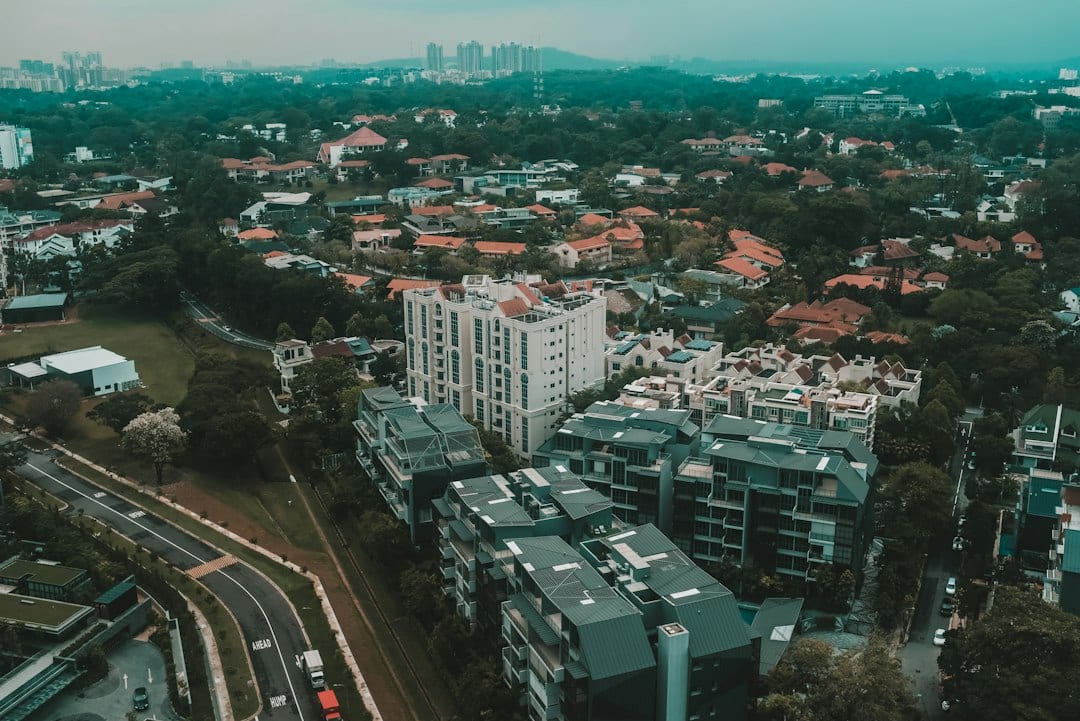
Kovan & District 19 Landed Property Guide
Landed FAQ
Clear, source-backed answers on owning, financing and rebuilding landed homes in Kovan and District 19.
Landed property comes with its own legal, financial and regulatory layers. These answers are designed to help Kovan homeowners, condominium upgraders and prospective buyers plan with confidence.
Foreign Ownership
Who can own landed property in Singapore?
Can foreigners buy landed property in Singapore?
Foreign persons generally need approval under the Residential Property Act to purchase landed residential property in Singapore. The main exception is restricted residential property in Sentosa Cove, which has its own approval framework. Singapore citizens can buy most landed homes without approval.
Source: Singapore Land Authority (SLA) — Residential Property Act. Last accessed 10 October 2026.
What is the approval process under the Residential Property Act?
Applications are submitted to SLA's Land Dealings Approval Unit (LDAU). SLA typically considers factors such as the applicant's permanent-residency status, length of residency, and economic contribution. Approval is granted on a case-by-case basis and is not automatic.
Source: Singapore Land Authority (SLA). Last accessed 10 October 2026.
Are there any differences for Singapore Permanent Residents?
Yes. Singapore Permanent Residents can buy condominiums and most non-landed residential property without approval, but purchasing landed homes requires LDAU approval. Applicants usually need to be PRs for a minimum period and demonstrate significant economic contribution.
Source: Singapore Land Authority (SLA) — Residential Property Act. Last accessed 10 October 2026.
Tenure & Land Title
Understanding freehold, 999-year and 99-year titles
What is the difference between freehold, 999-year leasehold and 99-year leasehold landed homes?
Freehold titles have no expiry and can be held indefinitely. 999-year leaseholds are very long-term leases that behave much like freehold for most practical purposes. 99-year leaseholds are granted for a fixed term; as the remaining lease shortens, the property's use, value and financing options can change.
Source: Singapore Land Authority (SLA) and Urban Redevelopment Authority (URA). Last accessed 10 October 2026.
How does tenure affect resale value and bank financing?
Longer remaining tenure generally supports stronger resale values and more favourable loan terms. As a lease shortens, banks may impose shorter loan tenures, lower loan-to-value ratios, or require a larger cash component. Market sentiment and location also influence value.
Source: SLA title records and Monetary Authority of Singapore (MAS) property-loan guidelines. Last accessed 10 October 2026.
How can I check the tenure of a landed property in Kovan?
You can purchase an INLIS title extract from SLA or check the title deed. URA's MapOne and some property-data platforms also display land-tenure information, though official title records remain the authoritative source.
Source: SLA INLIS and URA MapOne. Last accessed 10 October 2026.
ABSD & Stamp Duty
Stamp duties when buying or selling landed property
What are the current ABSD rates for Singapore citizens, PRs and foreigners buying landed property?
ABSD rates are set by IRAS and can change with budget announcements. The figures below are illustrative examples only — always confirm the latest rates at iras.gov.sg:
- Singapore citizen buying a first residential property: 0% (illustrative)
- Singapore PR buying a first residential property: 5% (illustrative)
- Foreigner buying any residential property: 60% (illustrative)
These rates do not apply uniformly to every scenario; additional property counts, entity purchases and transitional rules can change the amount payable.
Source: Inland Revenue Authority of Singapore (IRAS). Last accessed 10 October 2026.
Are there ABSD reliefs for married couples or downgraders?
Married couples with at least one Singapore-citizen spouse may qualify for ABSD remission when purchasing a second residential property, provided the first property is sold within the prescribed timeframe. Downgraders may be eligible for an ABSD refund under similar conditions. Eligibility rules, timelines and documentation requirements are strict.
Source: IRAS — ABSD remission and refund conditions. Last accessed 10 October 2026.
What stamp duties apply when buying or selling a landed home?
Buyers typically pay Buyer's Stamp Duty (BSD) and Additional Buyer's Stamp Duty (ABSD) where applicable. Sellers who dispose of a property within the Seller's Stamp Duty (SSD) holding period may pay SSD. Legal fees and agent commissions are separate transaction costs.
Source: Inland Revenue Authority of Singapore (IRAS). Last accessed 10 October 2026.
CPF & Financing
Using CPF, loans and TDSR for landed homes
Can I use CPF savings to buy landed property?
Yes, CPF Ordinary Account savings can be used for the purchase of approved residential properties, including landed homes, subject to the CPF Housing Withdrawal Limits and other conditions. The property must have a remaining lease that meets CPF Board requirements.
Source: CPF Board. Last accessed 10 October 2026.
What are the Valuation Limit and Withdrawal Limit rules?
The Valuation Limit (VL) is the lower of the purchase price or the market value of the property at the time of purchase. You can use CPF up to the VL, and beyond that up to the Withdrawal Limit (WL), which is generally 120% of the VL. Different rules apply depending on whether the property is bought with a housing loan.
Source: CPF Board — Housing Withdrawal Limits. Last accessed 10 October 2026.
How do TDSR and LTV limits affect landed-home financing?
MAS requires that total monthly debt obligations do not exceed 55% of gross monthly income under the Total Debt Servicing Ratio (TDSR). Loan-to-Value (LTV) limits cap the amount a bank can lend for a residential property purchase. Older or shorter-lease properties may attract stricter bank-specific terms.
Source: Monetary Authority of Singapore (MAS). Last accessed 10 October 2026.
How much cash downpayment is typically required?
For illustrative purposes only: a first housing loan may require a minimum cash downpayment of 5% to 25%, depending on the LTV and loan structure. Subsequent loans usually require a larger cash component. Check with your bank or mortgage broker for a precise assessment.
Source: MAS property-market measures and bank lending guidelines. Last accessed 10 October 2026.
Rebuilding & A&A Rules
Rebuilding, additions and alterations
What is the difference between rebuilding and Additions & Alterations (A&A)?
A&A works upgrade or extend an existing house while retaining most of the original structure. Rebuilding involves demolishing the existing building and constructing a new one. Rebuilding usually triggers a fuller set of planning, building and fire-safety approvals.
Source: Building and Construction Authority (BCA) and Urban Redevelopment Authority (URA). Last accessed 10 October 2026.
What URA rules govern plot ratio, setbacks and building height for Kovan landed homes?
URA's Master Plan and Development Control parameters set out Gross Plot Ratio (GPR), front/side/rear setbacks, storey-height limits and envelope-control requirements for landed housing areas. A Kovan site may also be subject to conservation or street-block controls, so a detailed URA planning consultation is advisable.
Source: URA — Development Control and Master Plan. Last accessed 10 October 2026.
When is LDAU, BCA or SCDF approval required?
SLA/LDAU approval is relevant for land-tenure or foreign-ownership matters. URA grants planning permission for rebuilding and major A&A. BCA approves structural and building plans. SCDF reviews fire-safety plans. Depending on the project, multiple agencies may be involved.
Source: SLA/LDAU, URA, BCA and SCDF. Last accessed 10 October 2026.
What are typical timelines and cost considerations for rebuilding?
Timelines vary widely. For illustration only: planning and agency approvals may take 3 to 6 months, and construction may take 12 to 24 months. Construction costs depend on design, site conditions, finishes and market rates at the time of tender. Obtain quotes from registered architects and builders.
Source: BCA and URA development guidelines. Last accessed 10 October 2026.
Kovan-Specific Questions
Landed homes in Kovan and District 19
Are there landed streets within walking distance of Kovan MRT?
Yes. Several landed enclaves lie within walking distance of Kovan MRT Station, including streets around Kovan Road, Jalan Namping, Simon Road and the surrounding estate. Exact walking distance depends on the specific street and access path.
Source: URA planning maps and Land Transport Authority (LTA) network maps. Last accessed 10 October 2026.
What tenure types are common in Kovan and District 19?
Kovan and District 19 feature a mix of freehold, 999-year leasehold and 99-year leasehold landed homes. Older estates and established streets often contain freehold or 999-year terraces and semi-detached houses, while newer sites may be 99-year leasehold.
Source: SLA title records and URA planning maps. Last accessed 10 October 2026.
Can older Kovan terrace or semi-detached houses be rebuilt?
Yes, many older terrace and semi-detached houses in Kovan can be rebuilt, subject to URA planning permission, BCA building-plan approval and any SLA/LDAU clearance required by the land title. The feasibility depends on plot size, tenure, zoning and site constraints. For a street-by-street feasibility check, see our Brand-New & Rebuild guide.
Explore more: Kovan Estate Guides, Landed Types Explained, Sell Your Kovan Landed and Market Insights.
Personalised Advice
Still have questions about Kovan landed property?
Every street and title is different. Speak with CK Yong, your Kovan landed property agent, for guidance tailored to your specific Kovan or District 19 property.
The information on this page is for general guidance only and does not constitute legal, financial, tax or investment advice. Regulations, rates and approval requirements change over time; please verify directly with SLA, URA, IRAS, CPF Board, MAS, BCA and SCDF, and seek advice from qualified professionals before making decisions.